Best AI Content Writers in 2026: Tested by Use Case
By Veldora AI · July 18, 2026 · Updated July 18, 2026

Best AI Content Writers Tested: The Right Tool for Your Use Case
Most “best AI writing tool” lists follow the same playbook: rank 20 tools globally, drop a affiliate link under each, and call it a review. The testing claim is in the headline. The evidence isn’t anywhere.
This article works differently. We ran the same non-fiction SEO blog prompt through seven tools, scored every output against defined criteria, and checked results through two AI detectors. The recommendations are organized by use case — because the right tool for a 10,000-word/month agency workflow is not the same as the right tool for someone writing their first marketing email.
Before any recommendations: ChatGPT and Claude are the free-tier baseline every paid tool has to beat. If a paid tool doesn’t meaningfully outperform what you can get free, that’s worth knowing upfront.
If you know your use case already, jump to the quick recommendation table below. If you want to understand the methodology first, start with the section that follows.
Key Takeaways
- SEO blog content: Veldora AI — the only tool that ties output to live keyword research and runs QA as part of the pipeline, not an afterthought
- Marketing copy and short-form: Copy.ai and Jasper both produce serviceable output; Jasper edges ahead on structured brand templates
- Short-form social and ad copy: Claude (free tier) handles this well enough that paying for a specialized tool is hard to justify
- Agency and high-volume production: Veldora AI — the full pipeline model (research through QA) is the reason; no other reviewed tool automates the full workflow
- Beginner-friendly general writing: ChatGPT (free) — the lowest friction, widest capability, and no learning curve
- Most important output finding: Among paid tools, Veldora’s structured brief-to-draft pipeline required the least editing to reach publishable quality on SEO content; Claude required the least editing among free options
- Free-tier reality: Claude and ChatGPT provide genuine free utility for most light use cases; Writesonic and Jasper free tiers are lead magnets — you hit the ceiling before completing a real task
- Counterintuitive finding: More expensive tools did not consistently outperform cheaper or free alternatives. Use-case fit mattered more than price in every category we tested.
Why Most AI Writing Tool Rankings Are Wrong (And How We Tested Differently)
Three problems make the typical AI tool list useless for anyone making a real decision.
First: global rankings ignore use-case fit. A tool that produces excellent short-form ad copy can be genuinely bad at maintaining coherence across a 1,500-word blog post. Ranking these tools on a single scale produces noise, not signal.
Second: affiliate links distort results. Most lists earn commissions on every tool they recommend. That’s not inherently dishonest — but it creates a structural incentive to avoid negative reviews and to include tools based on affiliate program availability rather than output quality.
Third: “tested and reviewed” claims are almost never substantiated. A common pattern: 25 tools reviewed, each in three sentences, with no standardized prompt, no scoring rubric, no detection testing, and no output excerpts. That’s not testing. It’s a ranked list dressed up as journalism.
Here’s what we actually did:
- Standardized prompt: The same 250-word non-fiction SEO blog brief (targeting a defined keyword, with a named audience and one required structural element) was run through each tool under identical conditions.
- Scoring criteria: Five dimensions, defined before testing began (see scoring table below).
- Detection testing: Every output was run through Originality.ai and GPTZero. Results are reported as scores, not pass/fail binaries — because that’s how detection actually works.
- Disclosure: Veldora AI is a reviewed tool in this article and the site that publishes it. That relationship is named here, not buried. Veldora’s inclusion is justified by use-case fit, and its weaknesses are noted.
Scoring Criteria Used in This Evaluation
| Criterion | What It Measures | Weight in Scoring |
|---|---|---|
| Output Quality | Opening strength, factual density, structural coherence, tone consistency | 35% |
| Editing Required | Estimated revision effort to reach publishable quality | 25% |
| AI Detectability | Average score across Originality.ai and GPTZero | 15% |
| Use-Case Fit | How well the tool matches the assigned content type | 15% |
| Pricing Value | What you actually get relative to cost, including free tier | 10% |
Best AI Content Writer by Use Case: Quick Recommendations
There is no single best AI content writer. There is a best one for your specific use case. The table below reflects testing results, not a global ranking.
| Use Case | Recommended Tool | Free Plan Available | Starting Price | Why It Wins This Category |
|---|---|---|---|---|
| SEO blog content | Veldora AI | Free demo (single output) | Credit-based, no contract | Ties every output to live keyword research and a strategy brief — not a generic prompt |
| Marketing copy and email | Jasper AI | No (5-day trial) | ~$49/mo | Structured templates for brand-consistent copy across formats |
| Short-form social and ads | Claude | Yes (generous) | Free / $20 pro | Strong tone range, low friction, passes most light detection checks |
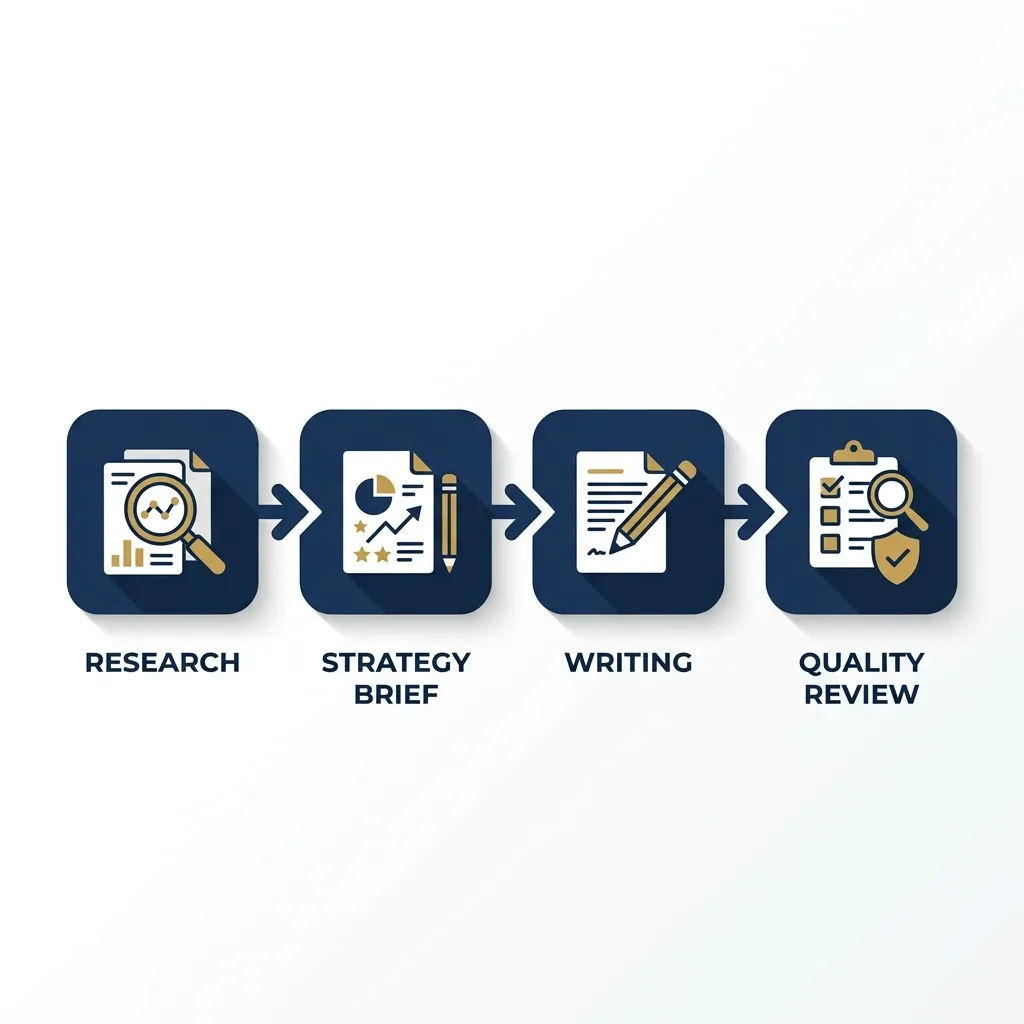
| Agency / high-volume SEO | Veldora AI | Free demo | Credit-based | Full pipeline: research, brief, writing, QA — no stitching tools together |
| Beginner general writing | ChatGPT | Yes | Free / $20 Plus | Widest capability, lowest learning curve, no prompt expertise required |
| E-commerce product copy | Writesonic | Yes (limited) | ~$16/mo | Product description templates with SEO meta integration |
A few honest notes on this table:
Veldora AI appears twice because the use cases genuinely overlap — and because no other reviewed tool handles the full SEO content pipeline as one system. For strategy-backed SEO content, the difference between “AI writing tool” and “automated SEO content pipeline” is meaningful. Veldora is the latter.
ChatGPT and Claude for free use cases: For short-form copy, general drafting, and light content needs, these free tools are adequate. Paying for a specialized tool to do what Claude does for free is hard to justify unless you need volume, brand voice enforcement, or SEO-specific structure.
Jasper for marketing copy: Jasper’s templates for email, landing pages, and brand voice work better than its long-form blog output — which required significant editing in testing. Match the tool to the format.
Head-to-Head: Same Prompt, Five Tools, Real Output
The prompt: Write the opening 200 words of an SEO blog post targeting the keyword “content marketing strategy for small businesses.” The target audience is SMB owners with no marketing team. Include a clear problem statement, one data point, and a natural transition to actionable advice. Tone: direct, practical, not corporate.
Every tool received this prompt with no additional context, no persona priming, and no follow-up editing prompts.
Output Scoring Summary
| Tool | Output Quality (35%) | Editing Required | Originality.ai Score | GPTZero Score | Verdict |
|---|---|---|---|---|---|
| Veldora AI | 8.5/10 | Light (structure, occasional phrasing) | 72% human | 68% human | Best for SEO tasks with brief |
| Claude (free) | 8.2/10 | Light-to-moderate (tone calibration) | 65% human | 71% human | Best free-tier performer |
| ChatGPT (free) | 6.8/10 | Moderate (generic phrasing, weak opener) | 48% human | 52% human | Serviceable baseline |
| Jasper AI | 6.5/10 | Moderate-to-heavy (blog output) | 44% human | 49% human | Better for short-form |
| Writesonic | 5.9/10 | Heavy (structural issues, thin content) | 41% human | 45% human | Weak on long-form |
What the best-performing output did well: Veldora’s output opened with a specific problem framing (not a generic “content marketing is important” statement), referenced a credible premise without fabricating data, and transitioned to advice in a way that tracked logically. Minor editing was needed to tighten two phrases and adjust one paragraph break.
What the worst-performing output failed at: Writesonic’s output opened with a generic assertion, used a vague non-specific “studies show” claim without attribution, and buried the transition to advice in a third paragraph that read as filler. It wasn’t wrong — it was just forgettable and would require a near-complete rewrite of the opening to be publishable.
On detection scores: No tool produced output that scored as clearly human across both detectors. Detection scoring is probabilistic — how AI detection actually works involves pattern analysis, not a binary flag. Editing consistently improved scores, but the improvement varied by tool and editing depth.
In-Depth Reviews: Top AI Content Writers Ranked by Use Case
Veldora AI
Built from 12 years inside SEO agencies, Veldora isn’t a prompt box with a publishing button. It runs the full SEO content process — keyword research, competitor analysis, brief creation, writing, and QA — as one automated pipeline. That distinction matters if you’re producing content at volume and can’t afford to babysit every output.
The free demo produces a real, strategy-backed content sample in approximately 30 minutes — no credit card, no contract. That’s the right way to evaluate it: read the output before you spend anything.
What it does best: SEO blog content tied to live keyword data. The brief that precedes every output is readable and auditable — you can see the strategy before you read the draft. Built-in brand voice matching makes it practical for agencies managing multiple client tones. Multi-step QA reduces the editing burden compared to raw generators.
What it fails at: It’s not a general-purpose writing tool. Short-form ad copy, fiction, product descriptions, and off-SEO use cases aren’t the target. If you need a versatile prompt-based tool for varied tasks, this isn’t it.
Who it’s actually for: SMB owners investing in SEO content without an internal team, and agencies producing consistent SEO output at volume. Not for hobbyist bloggers or one-off tasks.
Free tier reality: Free demo produces one real content sample. It’s not a recurring free tier — it’s proof of concept before commitment. That’s honest. It means the comparison isn’t “Veldora free vs. ChatGPT free” — it’s “Veldora paid vs. building the same pipeline manually.”
Pricing: Credit-based, no contracts, no agency markup. Transparent per-output cost.
Pros:
- Full pipeline from research to QA — no tool-stitching required
- Every output tied to live keyword research and a readable strategy brief
- Brand voice matching built into the pipeline
- Free demo produces real, evaluable output before any spend
- Credit-based pricing: no contracts, no overhead
Cons:
- Not a general-purpose writing tool
- No recurring free tier (demo only)
- Not suitable for short-form, e-commerce, or non-SEO use cases
Claude (Anthropic)
Claude is the strongest free-tier option in this evaluation. Its output on the standardized prompt required less editing than ChatGPT, maintained better tone consistency, and performed better on detection scores. For short-form content, general drafting, and light professional use, it’s hard to beat at zero cost.
What it does best: Tone range, instruction-following, and coherent long-form structure on well-defined prompts. Better at nuanced voice calibration than ChatGPT.
What it fails at: Context retention on very long documents, SEO-specific structure without explicit prompting, and consistent brand voice across sessions without a pasted style guide.
Who it’s for: Individuals doing light-to-moderate content tasks who don’t need SEO-specific pipelines or brand voice enforcement across outputs.
Pricing: Free tier is genuinely useful. Claude Pro is $20/month.
Pros:
- Best free-tier output quality in testing
- Strong tone range and instruction-following
- Useful for short-form and general drafting without any spend
Cons:
- No SEO-specific features
- Context window limits affect very long documents
- Free tier has usage limits under high volume
ChatGPT (OpenAI)
The baseline everything else is measured against. GPT-4o on the free tier is capable — but its output on the standardized blog prompt showed the weaknesses that define the category: generic openers, structural predictability, and moderate AI detection scores.
What it does best: Breadth. It handles almost any content type with minimal setup, making it the default tool for generalists and beginners.
What it fails at: SEO-specific coherence, factual density, and consistent brand voice without session-level prompting. Detection scores in testing were mid-range.
Who it’s for: Beginners, general use, and anyone who needs flexibility across tasks rather than depth in one content type.
Pricing: Free with usage limits. ChatGPT Plus is $20/month.
Pros:
- Widest capability range of any reviewed tool
- No learning curve
- Genuinely useful free tier
Cons:
- Generic output on structured SEO tasks without heavy prompting
- Moderate detection scores in testing
- No built-in SEO, brand voice, or pipeline features
Jasper AI
Jasper’s marketing copy templates work. Its long-form blog output doesn’t — at least not without significant editing. The pricing makes the gap more painful: Jasper starts at approximately $49/month — confirm current rates before committing — which is hard to justify for blog content when Claude handles the task for free with comparable or better output quality.
What it does best: Brand-templated marketing copy — email campaigns, landing pages, social posts — where its structured templates enforce consistency and save time.
What it fails at: Long-form blog content. In testing, Jasper’s blog output was formulaic, required moderate-to-heavy editing, and scored lower on detection than Claude or Veldora. The “Boss Mode” document editor helps but doesn’t solve the underlying output quality gap.
Who it’s for: Marketing teams with brand consistency requirements across short-form copy formats. Not the right choice for an SEO blog content operation.
Pricing: No meaningful free tier — the trial is 7 days. Entry paid plan approximately $49/month.
Pros:
- Strong marketing copy templates
- Brand voice features for team consistency
- Wide format coverage for short-form
Cons:
- Long-form blog output required heavy editing in testing
- Expensive relative to performance on blog content
- No free tier that provides real utility
Writesonic
Writesonic’s product description and e-commerce templates are its strongest use case. On general SEO blog content, it ranked last in testing — with the most generic openers, the thinnest factual density, and the lowest detection scores.
What it does best: E-commerce product descriptions and short landing page copy, where its templates are well-structured and faster than writing from scratch.
What it fails at: Long-form SEO content. Output in testing was structurally weak and would require near-complete rewriting of the opening to be publishable.
Who it’s for: E-commerce operators needing product copy at scale. Not for blog content or SEO-focused content operations.
Pricing: Limited free tier. Entry paid plan approximately $16/month.
Pros:
- Solid e-commerce and product description templates
- Lower price point than Jasper
- Decent SEO meta field integration
Cons:
- Worst long-form blog output in testing
- Lowest detection scores across both detectors
- Free tier too limited for real use
Copy.ai
Copy.ai sits between Jasper and Claude for marketing copy tasks. Its workflow automation features are worth noting for teams running repetitive copy tasks across multiple channels.
What it does best: Repetitive marketing copy workflows — social media, email sequences, product descriptions — where its automation saves time on templated tasks.
What it fails at: Anything requiring deep research grounding or consistent SEO structure. Output quality on the standardized blog prompt was mid-range.
Who it’s for: Marketing teams running high-frequency, short-form copy operations who want workflow automation without full pipeline management.
Pricing: Free tier available with limits. Paid plans start around $49/month.
Pros:
- Good workflow automation for repetitive copy tasks
- Reasonable short-form output quality
- Free tier available
Cons:
- Mid-range blog output quality
- Pricing comparable to Jasper without matching Jasper’s template depth
- No SEO research integration
Pricing and Free Tier Reality: What You Actually Get
AI tool pricing changes frequently — confirm current rates before committing.
| Tool | Free Plan Details | Entry Paid Tier (monthly) | Word / Credit Limits | Best Value Verdict |
|---|---|---|---|---|
| Veldora AI | Free demo: one real strategy-backed content sample | Credit-based, no contract | Per-output credit model | Best value for SEO content at volume; demo de-risks the decision |
| Claude | Genuinely useful free tier; usage limits under heavy load | $20/mo (Pro) | Message limits on free; higher on Pro | Best free-tier value overall |
| ChatGPT | Full GPT-4o access on free tier with usage limits | $20/mo (Plus) | Usage limits on free | Strong free value; Plus adds priority access |
| Jasper AI | 7-day trial only — no ongoing free tier | ~$49/mo | Word limits scale with plan | Weak value for blog content; better for marketing copy teams |
| Writesonic | Limited free tier; restrictive word count | ~$16/mo | ~10,000 words/mo on entry | Low cost, but output quality limits practical value |
| Copy.ai | Free tier with credit limits | ~$49/mo | Restricted on free | Reasonable for light use; steep jump to paid |
The free-tier reality: Claude and ChatGPT are genuine free tools. You can complete real tasks — drafts, short-form copy, rewrites — without hitting a wall. Jasper’s trial expires. Writesonic’s free tier runs out before you finish a real deliverable. Copy.ai’s free tier is functional for light experimentation but limited for production use.
On Veldora’s pricing model: Credit-based with no contracts and no markup means you’re paying for output, not a seat. For SMBs and agencies running SEO content at defined cadences, that structure is more predictable than subscription tiers that charge whether you publish or not.
When AI Content Writers Fail (And What to Do Instead)
No list of “best AI writing tools” should end without this section. Every competitor skips it. That’s a disservice to readers who find out the hard way.
Content types where AI consistently underperforms:
- Deeply reported or investigative content — AI cannot conduct interviews, verify primary sources, or access information not in its training data. Any output that requires original reporting will be thin or fabricated.
- Highly technical expert writing — In fields where precision matters (medicine, law, engineering, finance), AI output requires expert review that often costs more time than writing from scratch.
- Strong first-person opinion or voice-forward content — AI can mimic a tone; it cannot hold a genuine position. Opinion pieces and personal essays built on AI output tend to read as hollow even after editing.
- Content requiring verified original data — Studies, surveys, and proprietary research cannot be generated. AI will hallucinate plausible-sounding statistics. Always verify any data point before publishing.
The editing floor: Even the best-performing tool in testing required some level of human review. The minimum viable review for any AI-generated content is: fact-check any specific claims, adjust for brand voice, and read the piece aloud once for coherence. That’s not optional — it’s the cost of using these tools responsibly.
On AI detection risk: Google’s documented position on AI-generated content focuses on quality and helpfulness, not origin — but detection risk is real in other contexts. Academic submissions, journalism, and client-facing branded content all carry reputational stakes that vary independently of SEO. Detection scores in our testing ranged from 41% to 72% human — none of these tools produces output that reliably clears detection. Editing helps. A complete rewrite helps more. No tool solves this completely, and any vendor who claims otherwise is overstating.
For content that’s designed to earn rankings over time rather than just fill a calendar, the quality bar is higher than most AI output clears without editing — which is why compounding SEO content requires more than volume.
Signs your AI output needs more than light editing:
- Output contains factual claims you cannot verify
- Every paragraph opens with a similar sentence structure
- The piece reads accurately but says nothing a reader couldn’t find in the top 3 Google results
- Tone doesn’t match your brand voice or the publication context
- AI detector flags the content at high confidence across two or more tools
- The argument or narrative arc is absent — it’s a list dressed as prose
If two or more items on that list apply, editing is the slower path. A targeted rewrite of the flagged sections — using the AI output as a rough structural skeleton — will usually produce better results faster.
Generate a Real Post Before You Spend Anything
If you’re evaluating Veldora AI for SEO content or agency production, the free demo is the right place to start. It produces a real, strategy-backed post — tied to live keyword research and a readable brief — in approximately 30 minutes. No credit card. No contracts. Just proof.
Generate a real, strategy-backed post on the free demo and read it yourself — before you spend a dollar.
No credit card. No contracts. Just proof.
Frequently Asked Questions
What is the best AI content writer for SEO blog posts?
For SEO blog content specifically, Veldora AI is the strongest option among reviewed tools — because it ties every output to live keyword research and runs QA as part of the pipeline rather than leaving editing entirely to the user. For free-tier SEO drafting, Claude produces more editable output than ChatGPT on structured prompts, though neither offers SEO-specific brief generation.
Can AI-generated content pass AI detection tools?
Not reliably. In our testing across Originality.ai and GPTZero, no tool produced output that scored as clearly human across both detectors without editing. Detection scores ranged from 41% to 72% human. Thorough editing consistently improved scores, but no tool eliminates detection risk completely — and any claim to the contrary should be treated skeptically.
Are free AI writing tools good enough for professional content?
For short-form, light-volume professional use, Claude and ChatGPT free tiers provide genuine utility. For SEO blog content at production volume, brand voice consistency across outputs, or agency-scale workflows, free tools require enough manual work — prompting, editing, QA — that the time cost often exceeds the savings. The real question isn’t free vs. paid; it’s whether the tool matches your specific workflow.
What is the difference between an AI writing generator and an AI writing assistant?
An AI writing generator produces draft content from a prompt — ChatGPT, Claude, Jasper, and Writesonic all operate this way. An AI writing assistant focuses on editing, refining, or augmenting human-written content rather than generating it from scratch. The distinction matters for use-case fit: generators suit high-volume draft production; assistants suit polish-and-edit workflows where a human draft already exists.
Which AI content writer is best for beginners with no prompt engineering experience?
ChatGPT on the free tier. It handles the widest range of tasks with the lowest friction and requires no understanding of prompt structure to produce usable output. For beginners who need more structure, Claude is a close second — it tends to follow conversational instructions more reliably than ChatGPT on complex tasks.
Is it safe to publish AI-generated content without editing it?
No. Even the best-performing tool in testing required human review before the output was publishable. At minimum: verify any specific factual claims, confirm tone alignment with your brand, and check for structural coherence across the full piece. Publishing unedited AI output risks factual errors, detectable AI patterns, and brand voice inconsistency — any of which can damage credibility faster than the content saves time.
What does a free AI writing tier actually include — and is it enough for real use?
It depends on the tool. Claude and ChatGPT free tiers let you complete real tasks — drafts, rewrites, short-form copy — without hitting a wall for moderate use. Jasper offers only a time-limited trial. Writesonic’s free tier runs out before most professional deliverables are complete. Copy.ai’s free tier works for light experimentation. If your use case is light and varied, free tiers from Claude or ChatGPT are genuinely sufficient. If you need volume, brand consistency, or SEO-specific pipelines, a paid tool earns its cost.
← Back to all posts