AI Content Generation Tools Compared: Find the Right One for Your Workflow (2026)
By Veldora AI · June 28, 2026 · Updated June 28, 2026

The Best AI-Powered Content Generation Tools: A Use-Case Guide for Marketers and Teams
Most AI content tool roundups follow the same pattern: list 12 tools, give each one a vague “best for” label, and call it a comparison. You leave no closer to a decision than when you arrived — just more aware of how many options exist.
This article does something different. It applies eight consistent evaluation criteria to every tool reviewed, commits to tiered recommendations by user type and workflow context, and names real limitations instead of uniform praise. If a tool is weak for long-form SEO content, we say so. If one requires more editing than it saves at a certain team size, that is in here too.
The structure: evaluation criteria first, then tool-by-tool comparison with a summary table, then direct recommendations by user type, then a limitations section that covers what no tool handles well, and finally a prompt framework that improves output quality regardless of which tool you choose.
Key Takeaways
- ChatGPT is not a content generation tool — it is a general-purpose assistant. Without a structured prompt framework, brand guidelines enforced externally, and a CMS workflow built around it, it produces inconsistent output across a content program.
- Tool selection is a workflow decision, not a features decision. The question is not which tool has the most capabilities — it is which one reduces friction for your specific content operation.
- Editing overhead is a real selection criterion. Most AI-generated drafts require significant revision. A tool that produces a 60% draft is not the same as one that produces an 80% draft — that gap is hours per week at scale.
- Hallucination and brand voice drift are practical risks, not edge cases. Tools without knowledge base features produce consensus-level content that sounds like every other article on the topic.
- The right tool depends on your content type, team size, and editing tolerance. Every recommendation in this article is conditional — because a recommendation that is not conditional is not actually useful.
Why Most AI Content Tool Roundups Fail — and What to Look for Instead
AI text generation is now effectively commoditized. Most dedicated tools run on the same underlying large language models — GPT-4, Claude, or similar. The real differentiator is not what model powers the tool. It is what the tool layers on top: workflow features, brand controls, integrations, quality checks, and how well the generation step fits into how you actually produce content.
Using the wrong tool for your workflow does not just waste money — it creates more editing overhead than you would have had writing from scratch. A solo blogger and an agency managing 12 client content programs have fundamentally different requirements. A roundup that recommends the same tool to both is not useful to either.
Purpose-built AI content tools differ from general AI assistants in one practical way: they are designed around specific content workflows rather than open-ended conversation. Tools like Veldora’s strategy-backed writing pipeline embed content strategy, keyword research, and QA into the generation process — rather than treating writing as an isolated output step you prompt manually. That distinction matters for some workflows and is irrelevant for others. The criteria below will help you determine which category you fall into.
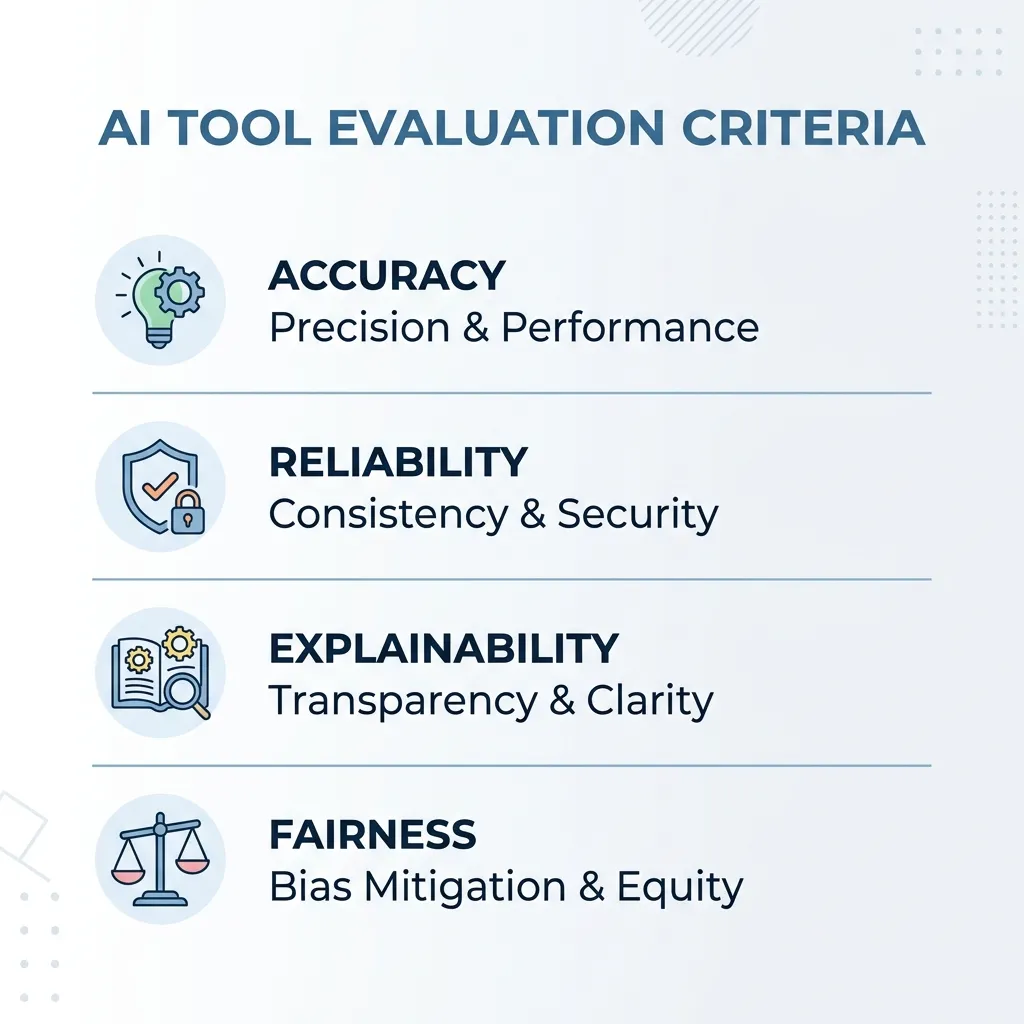
How to Evaluate an AI Content Generation Tool: 8 Criteria That Actually Matter
Before comparing tools, name what you are comparing them on. Most roundups skip this step — which is why their conclusions feel arbitrary. Here are the eight criteria applied to every tool in this article.
1. Content type fit. Not all tools handle all formats equally. Some are built for short-form copy (ads, social, email subject lines) and produce thin, generic long-form content. Others are tuned for long-form SEO articles but struggle with punchy ad copy. Match the tool to your primary content type before evaluating anything else.
2. Output quality and editing overhead. This is harder to evaluate than features because it requires actually running the tool with a consistent prompt. For this article, each tool was evaluated using a standardized test prompt: a 600-word blog section targeting a mid-competition informational keyword, with a specified audience and tone. Editing overhead is rated Low, Medium, or High based on the revision effort needed to make the output publish-ready.
3. Brand voice control. Does the tool support tone customization, brand profiles, or knowledge base uploads? Tools without these features produce output at the consensus level — grammatically fine, factually passable, stylistically forgettable. For teams producing content at scale, brand voice control built into the generation pipeline is not a nice-to-have.
4. Pricing model and feature gating. The sticker price rarely reflects the real cost. Check: is it per-seat, per-word, or credit-based? What is locked behind enterprise tiers? Does the free plan produce meaningful output, or is it a demo designed to frustrate you into upgrading?
5. Workflow integration. CMS compatibility, Zapier or API access, and publishing automation matter for teams with existing pipelines. A tool that generates great content in a silo and requires manual copy-paste into every channel adds friction that erodes its time advantage.
6. Team and collaboration features. Permissions, shared workspaces, and multi-user access are relevant for agencies and in-house teams. A solo creator does not need these — a team of five does.
7. Hallucination and factual accuracy risk. All current AI tools generate incorrect information. The question is how often and in what content types. Factual claims, statistics, product specs, and local information carry the highest hallucination risk. Know the risk profile before deploying in a content type that requires accuracy.
8. Free tier availability and meaningful limits. A free tier is only useful if it lets you evaluate output quality before paying. Some tools offer free trials with real generation limits. Others offer a few hundred words — not enough to assess long-form output.
Evaluation Criteria Checklist
Use this checklist when evaluating any AI content tool — including ones not covered in this article:
- Content type fit — Does the tool handle your primary format (long-form, short-form, SEO, social, email) well?
- Output quality and editing overhead — Run a consistent test prompt. How much revision does the output require?
- Brand voice control — Does it support tone settings, brand profiles, or knowledge base uploads?
- Pricing model and feature gating — Per-seat, per-word, or credit-based? What is locked behind higher tiers?
- Workflow integration — CMS compatibility, API or Zapier access, publishing automation?
- Team and collaboration features — Multi-user access, permissions, shared workspaces?
- Hallucination and accuracy risk — What content types are highest risk for this tool?
- Free tier availability — Is the free plan meaningful enough to evaluate real output quality?
The Top AI Content Generation Tools Compared
Each tool below follows the same structure: best for, pricing and free tier, standout feature, known limitation, and editing overhead rating. No tool gets a pass on limitations.
ChatGPT (OpenAI)
Best for: Ad hoc content tasks, ideation, and drafting when you have a structured prompt framework in place.
Pricing: Free tier available. ChatGPT Plus at $20/month for GPT-4 access. API pricing varies by usage.
Standout feature: Flexibility. It handles almost any content format when prompted well, and its context window allows long-form drafting.
Known limitation: ChatGPT is not a content system — it is a general-purpose assistant. Without external brand guidelines enforced through every prompt, consistent output across a content program is nearly impossible. There is no CMS integration, no workflow automation, and no QA layer. Teams that rely on ChatGPT alone tend to produce inconsistent content that drifts in voice and depth across posts.
Editing overhead: High (for consistent content programs). Medium (for one-off tasks with strong prompts).
Jasper
Best for: Marketing teams that need brand voice at scale across multiple content formats.
Pricing: Creator plan starts at approximately $49/month. Teams plan at approximately $125/month. Enterprise pricing available. Free trial available (no free tier).
Standout feature: Brand voice profiles and a knowledge base feature that lets teams upload brand guidelines, tone references, and product information — making output more consistent across writers and campaigns.
Known limitation: Jasper earns its price for teams that need brand voice at scale, but it requires meaningful setup time before the brand profiles produce reliable results. Long-form output still requires a competent editor — it is not a one-click publish solution. The price is hard to justify for solo creators or small teams with low content volume.
Editing overhead: Medium.
Copy.ai
Best for: Short-form marketing copy — ads, email subject lines, product descriptions, social captions.
Pricing: Free tier available (limited monthly word credits). Pro plan starts at approximately $49/month. Teams and enterprise tiers available.
Standout feature: Workflow templates for specific copy use cases. The short-form template library is one of the more practical in the category — less time spent prompting, more time editing usable drafts.
Known limitation: Long-form content is where Copy.ai struggles. Blog articles produced without significant prompt engineering tend to be thin, generic, and structured around obvious subheadings. It is a copy tool that has expanded into content, not a content tool that also handles copy.
Editing overhead: Low for short-form. High for long-form.
Writesonic
Best for: Marketers who need a mid-range option covering both short and long-form content without committing to a premium tool.
Pricing: Free tier available (limited credits). Individual plan starts at approximately $20/month. Teams plans available. Pricing adjusts based on content quality setting (GPT-3.5 vs. GPT-4).
Standout feature: Article Writer produces structured long-form drafts with SEO keyword targeting built into the workflow. The Chatsonic feature adds a conversational layer for research and ideation.
Known limitation: Output quality is noticeably affected by which model tier you are using — the lower-cost GPT-3.5 option produces drafts that require substantially more editing than the GPT-4 tier, making the effective cost higher than the entry price suggests. Brand voice control is basic compared to Jasper.
Editing overhead: Medium (GPT-4 tier). High (GPT-3.5 tier).
Rytr
Best for: Solo creators and freelancers who need a budget-friendly tool for moderate content volume.
Pricing: Free tier available (10,000 characters/month). Saver plan at approximately $9/month. Unlimited plan at approximately $29/month.
Standout feature: The most accessible pricing in this comparison for the functionality offered. Covers most short and medium-form content types with a straightforward interface that has a low learning curve.
Known limitation: Rytr is probably enough for a solo creator on a budget — but you are giving up meaningful brand voice control, SEO workflow integration, and long-form consistency. The output at longer lengths tends to repeat itself and lose structural coherence. It is a capable draft starter, not a finished content producer.
Editing overhead: Medium for short-form. High for long-form.
Writer
Best for: Enterprise content teams that need brand consistency, compliance controls, and multi-user workflows at scale.
Pricing: Team plan starts at approximately $18/user/month. Enterprise pricing available. No meaningful free tier for team use.
Standout feature: Enterprise-grade brand voice enforcement with style guide integration, terminology controls, and compliance features. Writer is purpose-built for organizations where brand consistency and legal review are hard requirements — not just preferences.
Known limitation: Writer is not the right fit for small teams or solo creators. The pricing model and setup overhead only make sense at team scale. The output quality for general SEO blog content is solid but not dramatically superior to Jasper — the value is in the governance layer, not the generation layer alone.
Editing overhead: Medium.
Veldora AI
Best for: SMBs and agencies running SEO content operations who need strategy, QA, and brand consistency built into the pipeline — not assembled manually.
Pricing: Credit-based transparent pricing. No contracts. Free demo available — generate a real, strategy-backed post before spending anything.
Standout feature: Veldora is not a writing assistant you prompt — it is an automated SEO content pipeline covering strategy, keyword research, competitor analysis, brand-matched writing, and multi-step QA. The strategy behind each post is readable and tied to live research. Built from 12 years of agency SEO experience.
Known limitation: Veldora is explicitly built for SEO blog content — it does not cover social copy, email, ad creative, or video scripts. It is not a self-serve tool for users who want to prompt and iterate manually. Teams looking for a general-purpose writing assistant should evaluate Jasper or Writesonic instead.
Editing overhead: Low to Medium (QA layer reduces revision burden, but human review is still part of the workflow).
AI Content Tool Comparison Table
| Tool | Best For | Starting Price / Free Tier | Standout Feature | Known Limitation | Editing Overhead |
|---|---|---|---|---|---|
| ChatGPT | Ad hoc tasks, ideation | Free / $20/month (Plus) | Flexibility across formats | No workflow system or brand controls | High (for programs) |
| Jasper | Marketing teams, brand voice at scale | ~$49/month / No free tier | Brand voice profiles + knowledge base | Setup time required; long-form still needs an editor | Medium |
| Copy.ai | Short-form marketing copy | ~$49/month / Free tier | Short-form copy templates | Thin long-form output without heavy prompting | Low (short) / High (long) |
| Writesonic | Mid-range short and long-form | ~$20/month / Free tier | SEO article writer with keyword targeting | Quality varies significantly by model tier | Medium / High |
| Rytr | Solo creators, budget use | ~$9/month / Free tier | Most accessible pricing | Limited brand voice; loses coherence in long-form | Medium / High |
| Writer | Enterprise content teams | ~$18/user/month / No free tier | Brand governance + compliance controls | Overkill for small teams; no meaningful free tier | Medium |
| Veldora AI | SMBs and agencies, SEO content ops | Credit-based / Free demo | Full pipeline: strategy, writing, QA | SEO blog content only; not a general writing tool | Low–Medium |
Which Tool Is Right for Your Workflow? Recommendations by User Type
Decision Matrix: Tool Recommendations by User Type
| User Type | Top Tool Pick | Why It Fits | Second Option |
|---|---|---|---|
| Solo creator or freelancer | Rytr | Lowest cost, low setup overhead, handles moderate volume | Writesonic (more format range) |
| Content marketer or in-house SEO team | Jasper | Brand voice profiles + knowledge base for content consistency | Writesonic (lower entry cost) |
| Agency managing multiple clients | Writer | Brand governance and multi-user controls built for client separation | Jasper (if compliance controls are less critical) |
| SMB or small team running SEO content ops | Veldora AI | Full pipeline with strategy and QA built in — not a tool you prompt | Jasper (if you need broader format coverage) |
Solo Creator or Freelancer
If you are producing content primarily for your own site or a small client list, Rytr is probably enough. The pricing fits a freelance budget, the interface is low-friction, and it handles short and medium-form content without a steep learning curve. What you give up: meaningful brand voice control, SEO workflow integration, and long-form consistency. If those matter to your work, Writesonic’s entry plan is worth the step up.
Content Marketer or In-House SEO Team
For teams producing a consistent volume of branded content, Jasper earns its price point — but only if you invest in setting up brand voice profiles and a knowledge base before you start generating at volume. The feature that justifies the cost is the ability to produce output that sounds like your brand, not like every other article on the topic. For teams focused on SEO content performance specifically, pairing a capable writing tool with a strategy-backed content generation approach is the difference between content that ranks and content that exists. For sustained SEO content programs, it is also worth understanding how content compounds over time — this breakdown of compounding SEO content strategy explains the long-term logic.
Agency Managing Multiple Clients
Agencies have a requirement that general-purpose tools do not solve well: complete brand separation between client accounts, with team access controls and consistent output at volume. Writer is built for this context. The brand governance layer — style guide enforcement, terminology controls, multi-user permissions — is what agencies specifically need that Jasper and Writesonic do not provide at the same level. The tradeoff is price and setup overhead, both of which scale with team size.
SMB or Small Team Running an SEO Content Operation
This is where Veldora AI fits in a way the other tools in this comparison do not. If you are running a content operation and need strategy, QA, and brand consistency built into the pipeline rather than assembled manually through prompts and spreadsheets, Veldora is not a writing tool you use — it is a content operation you run. The pipeline covers keyword research, competitor analysis, brand-matched writing, and multi-step QA. Every post’s strategy is readable and tied to live research, not a black box. The entry point is a free demo where you see real, strategy-backed content before spending anything.
Generate a real, strategy-backed post on the free demo and read it yourself — before you spend a dollar. No credit card. No contracts. Just proof.
What AI Content Tools Cannot Do: Limitations Every Team Should Understand
Every tool in this comparison has a category of content or a workflow condition where it falls short. Naming these limitations is not pessimism — it is how you avoid the editing burden that makes AI content workflows feel slower than writing from scratch.
Hallucination and Factual Inaccuracy
All current AI tools generate incorrect information. This is not a fringe risk — it is a structural property of how large language models produce text. The highest-risk content types: factual claims with specific numbers, statistics, product specifications, regulatory information, and anything tied to a specific date, location, or named entity.
A practical fact-checking process for AI-generated content: verify every claim that could be attributed to a source, never use AI-generated statistics without finding the original source independently, and treat all product-specific or technical claims as unverified until confirmed. The tools do not signal when they are hallucinating — the output reads as confidently as accurate content.
Editing Overhead Reality
Most AI-generated drafts require significant revision. “Significant” means different things at different tool tiers: a high-quality Jasper output with a well-structured prompt might need 20-30% revision. A one-shot ChatGPT draft for a complex topic might need 50-60% rewrite. A 50% rewrite is not light editing — at any real content volume, that is a meaningful time commitment. Set expectations before deploying AI tools in a content operation. The goal is not zero editing; it is editing that is faster and less frustrating than writing from scratch.
AI Detection and SEO Implications
Google’s guidance on AI-generated content is clear that the search engine evaluates content quality and helpfulness — not generation method. AI-generated content that is accurate, original in its analysis, and genuinely useful to readers is not penalized by policy. What does create real ranking risk is thin, generic AI output that provides no information gain over what already ranks — content that could have been written by any tool with the same prompt. The detection risk is secondary to the quality risk. Focus on output that earns its ranking rather than output that tries to pass a detector.
Brand Voice Drift
Tools without knowledge base features or brand profiles produce output at the consensus level. Technically correct, stylistically neutral, indistinguishable from competitor content. For a single one-off piece, this is manageable. For a content program producing 10-20 posts a month, it means your brand has no distinct voice in search. Brand voice drift is a selection criterion, not a stylistic preference — it affects how your content program builds authority over time.
AI Content Workflow: Realistic Pros and Cons
| Pros | Cons |
|---|---|
| Faster first draft production at scale | All tools produce factual errors — verification is mandatory |
| Lower cost per draft vs. freelance rates at volume | Editing overhead is real; budget time for revision, not just generation |
| Consistent structure and format when prompted well | Brand voice requires active setup and enforcement — it does not happen automatically |
| Useful for ideation, outline generation, and research assistance | Thin, generic output carries real SEO risk regardless of detection method |
| Scalable content volume for consistent publishing cadence | No tool eliminates human judgment from the quality layer |
How to Get Better Outputs: A Prompt Framework Any Tool Can Use
Output quality is not only a function of which tool you use. Prompt structure accounts for a significant share of output variability across every tool in this comparison. A better prompt will outperform a better tool in most workflow contexts — and a structured prompt template reduces editing overhead more reliably than upgrading to a more expensive plan.
Here is a five-element framework that works across ChatGPT, Jasper, Writesonic, and most other tools:
The Five-Element Prompt Framework
-
Role — Assign the AI a specific content role. Not “write a blog post” but “you are a senior content strategist writing for an audience of B2B marketing managers who already understand content marketing basics.”
-
Context — Give the tool what it needs: the target keyword, the audience, the intended purpose of this piece, and any competing articles or angle direction. Context is what prevents generic output.
-
Format — Specify the output structure explicitly. Word count, heading structure, number of subpoints, whether to include examples or bullet lists. If you do not specify format, the tool defaults to its training data average — which is usually a generic blog structure.
-
Constraints — Name what to avoid. “Do not use passive voice,” “avoid hedging language like ‘it is worth noting,’” “do not include a generic conclusion that restates the intro.” Constraints reduce the most common editing interventions.
-
Example output — Provide a sample paragraph or section in the voice and quality level you want. This is the single highest-leverage prompt element for brand voice consistency. The tool calibrates to your example more reliably than to any tone adjective you can name.
Before (vague one-shot prompt): “Write a 600-word blog section about choosing an AI writing tool.”
Result: Generic, predictable structure. Likely opens with “In today’s digital landscape…” Covers obvious points in obvious order. Requires substantial rewrite.
After (structured five-element prompt): “You are a senior content strategist writing for marketing managers who have already used ChatGPT and are evaluating dedicated AI writing tools. Write a 600-word section covering how to evaluate an AI writing tool based on editing overhead and brand voice control. Use second-person, direct sentence structure, and avoid benefit language like ‘saves time’ or ‘boosts productivity.’ Format: 2-3 short paragraphs followed by a 5-item checklist. Match the tone of this example paragraph: [paste example].”
Result: Structured, on-voice, directly applicable to the intended reader. Editing overhead drops substantially — you are polishing, not rewriting.
Iterative prompting also reduces editing burden compared to one-shot generation. Generate structure first (headings and subpoints), then expand each section individually, then polish in a final pass. Three focused steps produce better output than one ambitious prompt asking the tool to do everything at once.
Ready to See What a Strategy-Backed AI Content Pipeline Looks Like?
If you are running an SEO content operation and the comparison above points toward needing strategy, QA, and brand consistency built into the pipeline — not assembled through manual prompting — Veldora AI is built for that context.
Generate a real, strategy-backed post on the free demo and read it yourself — before you spend a dollar. No credit card. No contracts. Just proof.
See Your Strategy and Your First Content — Free
Frequently Asked Questions
What is the best free AI content generation tool?
Rytr offers the most usable free tier for solo creators — 10,000 characters per month with access to most of its core templates. ChatGPT’s free tier is functional for ad hoc drafting if you have a strong prompt framework. For SEO-focused content, Writesonic’s free tier offers limited but meaningful access to its article writer. No free tier produces publish-ready content without editing — the goal is evaluating output quality before committing to a paid plan.
How is a dedicated AI writing tool different from just using ChatGPT?
ChatGPT is a general-purpose assistant. Dedicated AI content tools layer workflow-specific features on top of similar underlying models: brand voice profiles, knowledge bases, SEO keyword integration, CMS connections, team collaboration, and structured templates for specific content types. If you are producing one-off content, ChatGPT with a solid prompt framework may be sufficient. If you are running a content program — consistent volume, consistent brand voice, consistent SEO alignment — a purpose-built tool reduces the scaffolding you have to build and maintain yourself.
How much editing does AI-generated content typically require?
It depends on the tool, the content type, and the quality of the prompt. Short-form copy from a well-prompted template in Copy.ai or Jasper might need 15-20% revision. Long-form SEO blog content from a one-shot prompt in any tool typically needs 40-60% revision or more. Budget for editing time before committing to an AI content workflow — the time savings come from faster drafting, not from eliminating the editing step.
Is AI-generated content bad for SEO?
Not by policy. Google evaluates content quality and helpfulness, not generation method. The real SEO risk is thin, generic content that provides no information gain over what already ranks — and AI tools make it easier to produce that kind of content at scale. AI-generated content that is accurate, specific, and genuinely useful to the target reader is not penalized. AI-generated content that restates obvious information in generic prose is a ranking risk regardless of how it was created.
Which AI content tool works best for long-form blog articles?
For long-form SEO articles, Jasper (with brand voice setup) produces the most consistent results among general-purpose tools. Writesonic’s Article Writer is a capable mid-range option. For teams running a dedicated SEO content operation, Veldora AI handles long-form SEO blog content as its primary use case — with strategy and QA built in rather than added manually. ChatGPT and Rytr can produce long-form drafts but require more editing investment to reach publishable quality.
Can AI content generation tools support brand voice or style guidelines?
Some can — meaningfully. Jasper and Writer both offer knowledge base and brand profile features that produce noticeably more on-brand output when properly configured. Copy.ai and Writesonic offer tone settings that provide partial voice control. ChatGPT can approximate brand voice through in-prompt examples but does not retain that context across sessions without explicit re-prompting. Tools without any brand voice infrastructure produce consensus-level content — technically correct, distinctively no one’s.
← Back to all posts